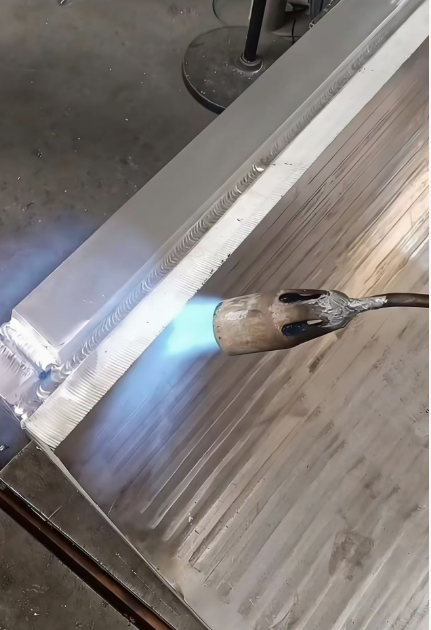
Aluminum alloys are widely used in manufacturing due to their excellent strength-to-weight ratio and corrosion resistance. However, aluminum brazing presents unique challenges directly tied to the material’s intrinsic properties. These characteristics shape weld quality, joint durability, and overall brazing success—making it essential for engineers and manufacturers to understand their impact and implement targeted solutions.
Key Aluminum Alloy Properties Shaping Brazing Outcomes
The inherent traits of aluminum alloys create specific hurdles during brazing, but with the right materials and techniques, consistent, high-quality joints are achievable:
1. Persistent Oxide Film: A Critical Barrier
Aluminum forms a dense, adherent oxide film (Al₂O₃) instantly upon exposure to air. This film has a melting point far higher than pure aluminum, is insoluble in molten filler metal, and prevents proper wetting of the base material. To overcome this, brazing requires high-performance flux that effectively removes existing oxide films and creates a protective barrier against re-oxidation during heating. Without this step, joints will be weak, porous, and prone to failure.
2. High Thermal Conductivity: Demanding Energy Precision
Aluminum’s thermal conductivity is approximately five times that of low-carbon steel, meaning heat dissipates rapidly during brazing. This requires higher line energy—achieved through 大功率 heat sources or more concentrated thermal inputs like induction brazing. Preheating is often necessary to ensure uniform temperature distribution across the workpiece, especially for thin-walled or complex components. Inadequate heat input leads to cold joints, where the filler metal fails to fully fuse with the base alloy.
3. Significant Thermal Expansion & Shrinkage
Aluminum alloys have a linear expansion coefficient roughly twice that of low-carbon steel, and their solidification shrinkage rate is equally elevated. This combination leads to substantial thermal stress and deformation during brazing. When joining aluminum to dissimilar metals (e.g., copper) or working with rigid joint designs, the mismatch in expansion and shrinkage can cause cracking. Using filler metals (such as specialized aluminum brazing wire) with compatible thermal properties and optimizing joint geometry to absorb stress mitigates these risks.
4. Ambiguous Phase Transition: Risk of Overburning
Unlike steel, aluminum shows minimal color variation between solid and liquid states, making it difficult to visually gauge molten pool temperature during brazing. Prolonged heating—common when working with thick sections or multi-joint assemblies—can lead to overburning. This degrades the alloy’s mechanical strength and corrosion resistance by altering its microstructure. Precision temperature control, paired with high-quality filler materials that maintain consistency, reduces overburning and preserves material integrity.
5. Volume Shrinkage & Impurity Vulnerability
Aluminum experiences approximately 6% volume shrinkage when solidifying from a liquid, creating internal stress that can distort joints. Additionally, low-quality flux-cored brazing wires may introduce impurities (e.g., carbonized lubricant residues) or release gaseous byproducts during heating, leading to porosity and softening of the weld zone. Choosing certified, high-purity brazing materials—including solid wires, flux-cored wires, and brazing rings—eliminates these issues and ensures dense, strong joints.
Elevate Brazing Reliability with Expert Materials
Successful aluminum brazing hinges on understanding material properties and selecting the right auxiliary materials to address their challenges. As an integrated supplier of aluminum brazing solutions—offering premium solid wires, flux-cored wires, brazing rings, and specialized fluxes—we bring 20 years of experience in aluminum processing and thermal joining applications.
Our products are engineered to tackle the unique hurdles of aluminum alloy brazing: our fluxes eliminate oxide barriers, our high-purity wires prevent porosity, and our tailored filler metals accommodate thermal expansion. By partnering with us, manufacturers can enhance brazing consistency, reduce rework costs, and produce durable, high-performance components.
Contact our technical team today to learn how our aluminum brazing materials and expertise can support your specific application needs.