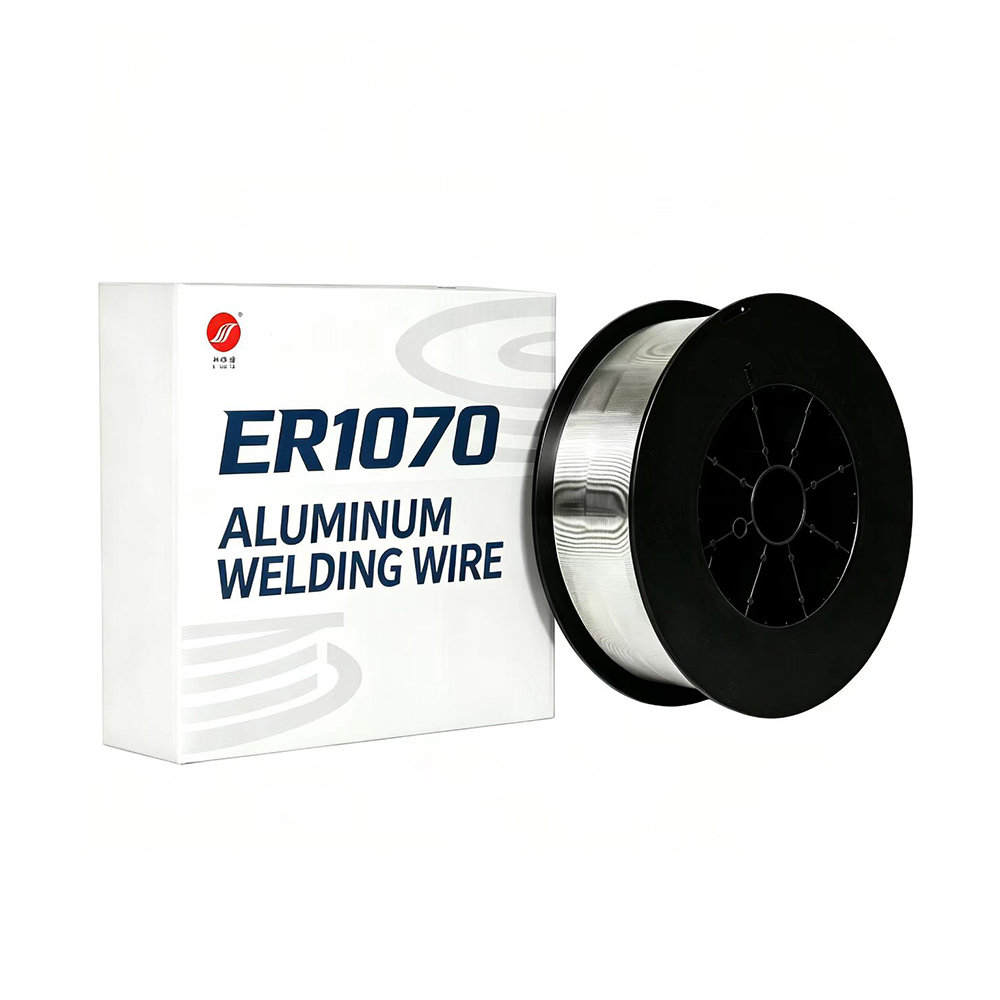
Aluminum bicycle frames are widely used for modern high‑end bikes. They deliver light weight, solid strength and reliable corrosion resistance. Frame welding distortion remains one major headache for most frame fabricators. Aluminum conducts heat fast. It also carries large thermal expansion and low melting points. During common TIG or MIG work, frames easily suffer bending, twisting, tube misalignment or warping.
Welding distortion causes dimension errors, assembly problems, uneven stress distribution, and potential cracking risks. This article explains the main causes of aluminum frame welding deformation and provides practical process solutions and professional welding wire selection advice for bicycle frame manufacturers.
Main Causes of Aluminum Frame Welding Distortion
- High thermal sensitivity: 6061 and 6063 aluminum alloys shrink significantly after heating, resulting in internal residual stress.
- Excessive heat input: Continuous welding and overheating cause uneven thermal shrinkage.
- Unstable clamping & tooling: Without professional positioning fixtures, frames deform freely during welding.
- Mismatched welding wire: Unsuitable filler wire leads to unbalanced weld shrinkage and micro cracks.
- Improper cooling: Uneven cooling intensifies frame twisting and bending.
Pre-Welding Control: Tooling, Clamping and Welding Sequence
Pre-welding control is the most effective way to reduce frame distortion.
Professional frame welding fixture
Use integrated positioning tooling to fix the head tube, bottom bracket, seat tube and dropouts. Firm clamping limits free deformation during welding.
Symmetrical and segmented welding
Avoid full-length one-time welding. Adopt tack welding, interval welding and alternate symmetrical welding to balance heat distribution and minimize stress concentration.
Interpass temperature control
Control heat input strictly and avoid continuous high-temperature accumulation to reduce overall thermal deformation.
Welding Wire Selection to Reduce Frame Distortion
Matching proper aluminum welding wire greatly reduces weld shrinkage, deformation and cracking. Most bicycle frames are made of 6061 / 6063 aluminum alloy.
ER4043 Aluminum Welding Wire (Best for Standard Bike Frames)
ER4043 silicon aluminum wire offers excellent fluidity, smooth bead appearance and uniform shrinkage. It produces less welding deformation and suits mass production of 6061 / 6063 bicycle frames. Stable welding performance reduces defective rates effectively.
ER5356 Aluminum Welding Wire (High-Strength Frames)
ER5356 magnesium aluminum wire provides higher tensile strength and better crack resistance. It is ideal for high-performance racing bicycle frames that require superior mechanical strength and structural stability.
Key Welding Process Parameters
- Use low current and fast welding speed to reduce heat input
- Keep uniform weld width to avoid unbalanced shrinkage
- Do not use forced air or water cooling to prevent sudden cooling cracks
- Distribute tack welding points evenly for balanced stress
Post-Welding Correction and Stress Relief
Minor frame deformation can be corrected through manual calibration and stress relief treatment. For repeated large deformation issues, manufacturers need to optimize tooling, welding sequence and welding wire matching to solve the problem fundamentally.
Conclusion
Aluminum bicycle frame welding distortion is caused by material characteristics, tooling accuracy, welding technology and filler wire compatibility. By using standardized fixtures, symmetrical segmented welding, controlled heat input, and matched ER4043 / ER5356 aluminum welding wire, factories can greatly reduce frame bending, twisting and dimension errors, improving finished product quality and production stability.